Houston heat does not negotiate. By May, water temps edge toward the high 80s, UV beats down for 10 hours a day, and a stray storm can dump two inches of rain between lunch and dinner. That cycle invites algae, swings your water chemistry, and puts real wear on pumps, filters, and seals. Owners in Katy and across the west side learn quickly that a pool left to itself for even a couple of weeks can turn from backyard retreat to murky project.
I have spent years helping homeowners in Fort Bend and Harris County dial in predictable, low-drama routines. The rhythm is simple once it clicks. Weekly touches keep surfaces clean. Monthly work sets the baseline so your sanitizer and circulation do the heavy lifting. And after storms or parties, you take deliberate corrective steps. Texas Pool Butlers and many seasoned Houston pool cleaning pros work from the same playbook because it works in our climate, not on paper but in real backyards with oak leaves, pollen, and a concrete deck that bakes at 100 degrees.
What follows is the monthly cadence that saves money on premature equipment failures and holds your water clear through August. It is the approach we use in professional pool maintenance service Houston homeowners rely on. I will flag tasks that are truly DIY friendly, point out where people overreach, and name the times you will save frustration by calling for pool cleaners Houston locals trust.
Why monthly work matters more in Katy and greater Houston
Warm water changes the math. At 86 to 92 degrees, the kill time for chlorine shortens, your pH drifts upward faster, and algae can double every few hours. This is not Arizona or the Carolinas. We live with Gulf moisture, rapid temperature swings between sunny afternoons and cool fronts, and plenty of airborne organics from live oaks, crepe myrtles, and pines.
Anecdotally, I see twice as many green pool calls in late May and early September as in June or July. It is not because the heat goes away. It is because routine slips during travel or back-to-school, then a rainstorm dilutes chlorine and drops in phosphates, and the system cannot catch back up. A careful monthly routine prevents those recoveries that cost you days and extra chemicals.
A monthly snapshot of a healthy pool
If you could freeze-frame a well-kept Katy pool, a few numbers tell the story. Free chlorine sits in the 3 to 5 ppm range for liquid-chlorine pools, a touch lower if supplemented with UV or ozone. For saltwater systems, 4 to 6 ppm often works better because CYA is usually higher. pH is stable near 7.6. Total alkalinity holds between 70 and 100 ppm for most plaster pools in the area. Calcium hardness is typically 200 to 400 ppm depending on your fill source and evaporation. Cyanuric acid should be 30 to 50 ppm for traditional chlorination, 60 to 80 ppm for saltwater chlorine generators.
The numbers alone do not guarantee easy care. Brush the walls monthly to deny algae a foothold, keep your pump seals from weeping, and know your filter’s clean pressure baseline. Those are the quiet difference makers.
The 20 minute monthly checklist that pays for itself
- Test and log pH, free chlorine, total alkalinity, calcium hardness, and CYA with a reliable drop kit. Brush all walls, steps, and tile line thoroughly, especially shaded areas and behind ladders. Inspect and clean the pump basket and skimmer baskets, checking for cracks and brittle plastic. Read and record filter pressure, then backwash or rinse if the gauge is 8 to 10 psi over clean baseline. Walk the equipment pad for leaks, salt creep, rust, and unusual sounds, and lubricate accessible O-rings with silicone.
Do this every month without exception. The rest of your pool life becomes a lot simpler.
Chemistry that holds in Gulf Coast heat
Start with pH. In Houston, baking sunlight and aeration make pH drift upward. Most plaster pools trend from 7.6 toward 8.0 in a week or two. If you let it go, chlorine becomes less effective and scale creeps in on your waterline tile and salt cell plates. I encourage owners to test pH weekly but to validate the trend monthly with a reliable kit rather than strips. If you are adding muriatic acid more than once a week, check two things: total alkalinity may be too high for your system’s aeration, and waterfalls or deck jets may be driving pH up faster than your current dosing plan can handle. For many Katy plaster pools, dropping TA gradually to 70 to 80 ppm reduces acid demand by a third.
Free chlorine needs to match your CYA. Houston sun will burn through unstabilized chlorine in a couple of hours. CYA, properly set, cushions that. The pitfall is relying on tablets for all sanitation. Trichlor adds CYA each time it dissolves. By mid summer, I have seen CYA creep over 100 ppm, and suddenly you need 7 to 10 ppm of free chlorine just to maintain a safe residual. If your pool has lived on tabs, test CYA monthly. If you find yourself over 80 ppm for a non salt pool, partial drain and refill is often the cleanest reset. Houston pool maintenance pros do this routinely in shoulder months when water tables are stable and temperatures are moderate.
For calcium hardness, the city supply and wells around Katy often land in the 150 to 250 ppm range. Evaporation concentrates that over the summer. Aim to keep total hardness under 400 ppm to limit scale. If you are running a heater, scaling becomes more aggressive inside the exchanger, so the quality of your balance matters even more. Use a saturation index calculation occasionally to see if your water is leaning too scale forming. A small tweak in pH or alkalinity can pull you back into a safe window.
Last, phosphate and nitrate levels get a lot of airtime. In practice, I treat them as troubleshooting metrics. If you keep chlorine and circulation healthy, most pools ride through high phosphate season. When I do see recurring yellow dusting on shady walls or persistent algae after a storm, I test phosphates. If the number is in the thousands and the pool has live oak overhang, a remover can help break the cycle, but it is not a monthly staple.
Filter care, by filter type
Cartridge filters dominate newer builds in Katy for their water clarity and low backwash needs. If you run a four-cartridge set, pull them once a month during peak swim season and hose from top to bottom until runoff clears. Rotate the cartridges when you reinstall. Twice a year, soak them in a commercial cleaner to remove oils and fine debris. Do not be tempted to blast cartridges with a pressure washer. It weakens the media and shortens life by half. A healthy set lasts 2 to 4 years depending on bather load and tree cover.
For sand filters, record the clean pressure right after a full backwash and rinse. Each month, if you see pressure 8 to 10 psi over baseline, backwash. If you find yourself backwashing weekly, you likely have one of two problems. Either your sand bed is channeling and needs a deep clean or you have a heavy load of fine debris that a clarifier can help group for better capture. Sand media typically performs well for 5 to 7 years in Houston before it rounds off and loses efficiency. When that happens, many owners call pool services Houston based teams to swap media or upgrade the filter altogether.
DE filters offer the finest filtration but demand attention. After a backwash, recharge with the manufacturer’s recommended amount of fresh DE, measured carefully, not guessed. Each month, check the manifold and grids for tears or cracked collars if you are seeing DE blow back through returns. If you notice pressure climbing faster than usual and water clarity lagging, the grids may be loaded with oils that do not release during a simple rinse. A complete teardown and soak is the fix. This is a common point where homeowners choose a Houston pool cleaning service for an annual deep clean, because teardown is messy and exacting.
Circulation, pumps, and the quiet cues you should not ignore
Variable speed pumps are everywhere now, and for good reason. Running 24 hours a day at low RPM moves more water for less cost than blasting at full speed for short windows. In hot months, I like to see a base program that turns the pool volume 1 to 1.5 times daily. On a 16,000 gallon pool, that might be 1,500 to 2,000 RPM for 18 to 24 hours with a mid day ramp to 2,400 RPM to pull better skimming. Each month, check your timer or automation to confirm the schedule has not drifted after a power blip. A surprising number of green pool calls start with a summer storm and a pump that failed to resume its normal program.
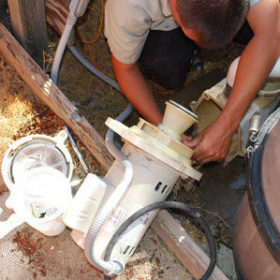
Inspect the pump lid O-ring and the union O-rings monthly. If they look flat, cracked, or feel sticky, clean them and apply a thin coat of silicone lube. Air bubbles under the pump lid or a column of bubbles in the returns can signal a suction side leak, usually at a lid seal, union, or drain plug. If your pump loses prime overnight, do not keep it limping. Suction leaks overwork seals and can overheat the motor. Many homeowners handle O-ring service themselves, but when the symptom persists or the pump screams at startup, call for pool pump repair Houston technicians handle daily. A ten minute diagnostic can save a motor.
If you hear a dry, high pitched whine, that is often a front bearing telling you its days are numbered. If the pump is under three years old, check warranty status before you pay out of pocket. When it is time to replace, consider a properly sized variable speed model, not whatever the big box store has in stock. A 1.65 to 2.2 HP VS pump covers most residential pools in Katy. Oversize units pushed at full speed cost you in power and can stir up fine debris that would otherwise settle out for easy vacuuming.
Salt systems, tabs, and liquid chlorine in the same backyard
Saltwater chlorine generators make summer simpler, but they are not set-and-forget. Monthly, pull the cell and check for scale buildup. Even a thin rind can cut production dramatically. If you see white crust, soak the cell in a mild acid solution per the manufacturer’s ratio until the fizzing stops. Do not leave it in longer than necessary. Houston’s hardening water through summer plus a slightly high pH will scale a cell quickly.
Check the salt level on the controller against a good test. Controllers drift. If the cell shows low salt but your test reads 3,200 ppm, clean the cell and check the temperature sensor. In winter, many systems reduce or halt production because cold water changes conductivity.
Trichlor tablets have their place. They stabilize chlorine input during vacations and work well inside a side-stream feeder. Use them intentionally, not as a primary sanitizer all season or you will spike CYA. Liquid chlorine gives you full control without extra stabilizer but needs more frequent dosing. For many Katy owners, a blend works: a salt system handles baseline, a small feeder with tabs covers vacation weeks, and liquid chlorine shocks after parties or storms.
Surface care that makes chemical work easier
Algae prefers shade and texture. Step edges, behind ladders, the light niche, and the tile grout line grow the first bloom. A monthly deep brush with a stainless combo brush on plaster or a nylon brush on vinyl and fiberglass keeps films from building. It is not glamorous, but the time you spend brushing is money you do not spend on algaecides.
Pay attention to the waterline. Houston water often leaves a tan or white ring where evaporation beats refill. Wipe the tile monthly with a mildly abrasive tile cleaner designed for pools. When the ring has been ignored for a season, professional glass bead blasting recovers the look without gouging your grout. If the ring returns within a few weeks after a thorough cleaning, test pH and calcium hardness. You may be running a bit too scale positive.
Vacuuming is still valuable even if you run robotic cleaners. Robots handle dailies, but a manual vacuum through the skimmer gives your filter a chance to grab fine dust, pollen, and dead algae concentrated in corners and steps. Once a month, dedicate the time to slow, overlapping passes.
Baskets and skimmers, the cheapest insurance you can buy
A $15 skimmer basket can protect a $1,200 pump. Every month, pull skimmer and pump baskets, clean them, and inspect for cracks and UV brittleness. Replace at the first sign of failure. If a basket collapses, debris jumps straight into the pump impeller, clogs the vanes, and starves the system of flow. Symptoms include a sudden drop in return pressure, the heater tripping off, or the salt system reading low flow.
On older pools, the skimmer weirs sometimes break or stick. Without a functioning weir door, you lose the essential surface skim and end up with a ring of floating debris. Replace sticky weirs. It is a quick fix that dramatically improves skimming efficiency.
Heaters, chillers, and Houston’s long shoulder seasons
Gas heaters do not care that it is 92 degrees most days. They care about water quality and flow. Each month, check that the heater fires cleanly and that there is no soot marking around the top vent. Soot suggests incomplete combustion, often from a restricted air intake or a failing burner tray. Scale inside a heat exchanger will trigger high limit faults. If you see recurring errors, do not keep resetting. Poor flow or scale will shorten the life of a heater in a hurry. This is prime territory for pool equipment repair Houston professionals, because descaling an exchanger and checking gas pressures calls for proper tools.
Chillers are common now, especially on sun-baked plaster pools with limited shade. They keep water in the high 70s to low 80s through July and August. Monthly, clear debris from coils, confirm condensate drains are open, and verify flow rates set by the installer. A chiller that short cycles often needs either a flow tweak or a simple coil cleaning.
Automation and the small settings that swing big dollars
Plenty of Katy pools now run on automation panels tied to an app. They make life easier, right until a storm knocks the program sideways. Each month, verify time, schedules, and interlocks. If you have a salt system, make commercial pool repair Katy sure the heater interlock stops the salt cell when the pump is off. Confirm freeze protection settings before the first cold snap, usually late November or early December. I have seen cracked manifolds after a 28 degree night because freeze protect was disabled during a summer service call and never re-enabled.
Firmware updates can bring new features but can also reset outputs. After any update, recheck pump speeds, heater settings, and light programs. Homeowners often call Houston pool cleaning services when automation goes quirky. A trained eye can sort a mis-set dip switch from a genuine board failure in minutes.
After storms, parties, and pollen spikes
Monthly routines hold the line, but life throws curveballs. Strong storm with two inches of rain in a day? Expect dilution and organics. I test chlorine, add liquid to reach the high end of the target range, and run the pump high for several hours. If the water looks cloudy, a clarifier can speed recovery, but I avoid flocs in cartridge systems unless absolutely necessary because they can gum media.
After a big party, shock with liquid chlorine in the evening, brush, and let the system run overnight. Oils from sunscreens and lotions find their way into filters quickly. A degreaser rinse of cartridges the next day helps.
In March and April, oak pollen can blanket the surface. Skimmers get overwhelmed. Clean baskets daily during heavy drops and consider a fine mesh skimmer sock for that stretch. It traps the small stuff before it cements to cartridge pleats.
When it is time to call a pro
- Filter pressure will not return to normal after cleaning, or DE returns to the pool. Pump loses prime, screams at startup, or trips the breaker repeatedly. Salt cell reads low flow or zero production even after cleaning and verifying salt level. Heater fires then shuts down with errors, or shows soot or a gas smell at the equipment pad. Cracks, leaks, or rust appear around returns, the skimmer throat, or at the equipment pad.
A reliable Houston pool maintenance service sees these patterns daily. You may only see them once every few years. That experience shortens downtime, avoids collateral damage, and often costs less than a weekend of guesswork. If you are in the west suburbs and need pool repair Katy or pool repair Katy TX specifically, choose a company that explains what failed, shows you the worn parts, and leaves you with numbers you can track next month. For motor issues, the phrase to look for is pool pump repair Houston because you want someone who replaces seals and bearings, not just whole pumps. For controls, a shop that handles pool equipment repair Houston wide will have parts on hand instead of waiting a week.
If you prefer to offload more of the routine, look for a pool cleaning service Houston homeowners recommend for consistency, not just price. Top pool cleaners Houston side build routes that fit our climate. They do not skip brushing in August and they know that a mid day RPM bump pulls more leaves before the afternoon storm.
Practical examples from local backyards
A Cinco Ranch family called late summer about a cloudy pool that kept failing their overnight chlorine loss test. The owner had leaned hard on pucks all season. CYA tested at 140 ppm. Free chlorine had to be so high to be effective that swimmer comfort suffered. We performed a 40 percent drain and refill, switched to liquid dosing, and held CYA at 50 ppm. The pool cleared in two days and held clean with less chlorine than they had used all month.
In Old Katy, a plaster pool with a rock waterfall suffered constant pH rise and a powdery white film at the waterline. TA measured 120 ppm, and the variable speed pump ran at low RPM without a high speed skimming block. We reduced TA to 70 ppm over two weeks, set a daily mid day speed bump for skimming and aeration, and cut acid additions by half. The waterline film stopped building once the pH stabilized around 7.6.
A Bellaire pool owner reported the heater would not stay lit. Pressure gauge showed normal. However, the salt cell was coated with light scale and the returns showed microbubbles at idle. The cell’s flow switch was chattering. We cleaned the cell, replaced a brittle pump lid O-ring, and the heater held fire. The root cause was slight suction air that did not trip flow visibly but was enough to bother safety switches.
Budgeting time and cost the smart way
Plan a monthly hour for the deeper work and 10 to 15 minutes a week for routine touch-ups. A typical supply budget during peak season lands around 40 to 80 dollars a month for acid, chlorine, test reagents, and cleaner. Add a bigger ticket item once or twice a year, such as a cartridge set or a seal kit. By keeping filters healthy and water balanced, you extend the life of plaster, equipment, and heaters. Ignore any part of that trio and costs rise fast.
If you pool maintenance service houston hire help, a reputable Houston pool cleaning service or Houston pool maintenance service will tailor frequency to your comfort level. Some families want a weekly visit, others prefer a biweekly check with owner maintenance between. Ask how they document readings and what they consider a normal filter pressure change. If they hand you a clean baseline number, you can participate intelligently, not just wait for a green surprise.
Picking partners who understand our climate
Plenty of outfits advertise pool service in Houston. The difference shows when things go off script. Texas Pool Butlers built a reputation by explaining not just what they do, but why. That is the sort of partner you want, whether you live near LaCenterra, down in Fulshear, or inside the Loop. A team that services heaters, automation, and pumps under one roof shortens repair windows. If you need recurring care, look for houston pool cleaning services that offer documented water tests, filter pressure logs, and before-and-after photos for major cleanings.
For those who handle most of the tasks themselves, keep a shortlist handy for emergencies: pool services Houston residents rate well for honest diagnostics, pool maintenance service Houston pros who tackle those once-a-year teardowns, and specialists who focus on pool pump repair Houston wide so you are not replacing an entire pump for lack of a 20 dollar seal.
The payoff you actually feel in July
Monthly discipline in our climate does not earn you bragging rights. It gives you weekends back. It means your kids jump into clear water on the first hot Saturday, not the second. Your pump runs quietly, your salt cell actually makes chlorine, and your filter pressure tells a story you understand. When a storm blows through, you know exactly what to do. And when you do need help, you already have the number for a pro who knows Katy water, Houston weather, and the way small details become big expenses if you let them slide.
Do the small work on schedule. Log a few numbers. Brush the shady wall. Treat your baskets like the cheap insurance they are. That is how pools in this part of Texas stay friendly all season long.